
Is this still the current answer? Review the instruction behind the date
Review one FAQ or instruction against the service as it works today. Record what was checked, who checked it and what should trigger the next review.
A customer follows the instructions on your website and arrives at the wrong place. The page loads, the links work and the writing is clear. The problem is that the work described by the page has changed.
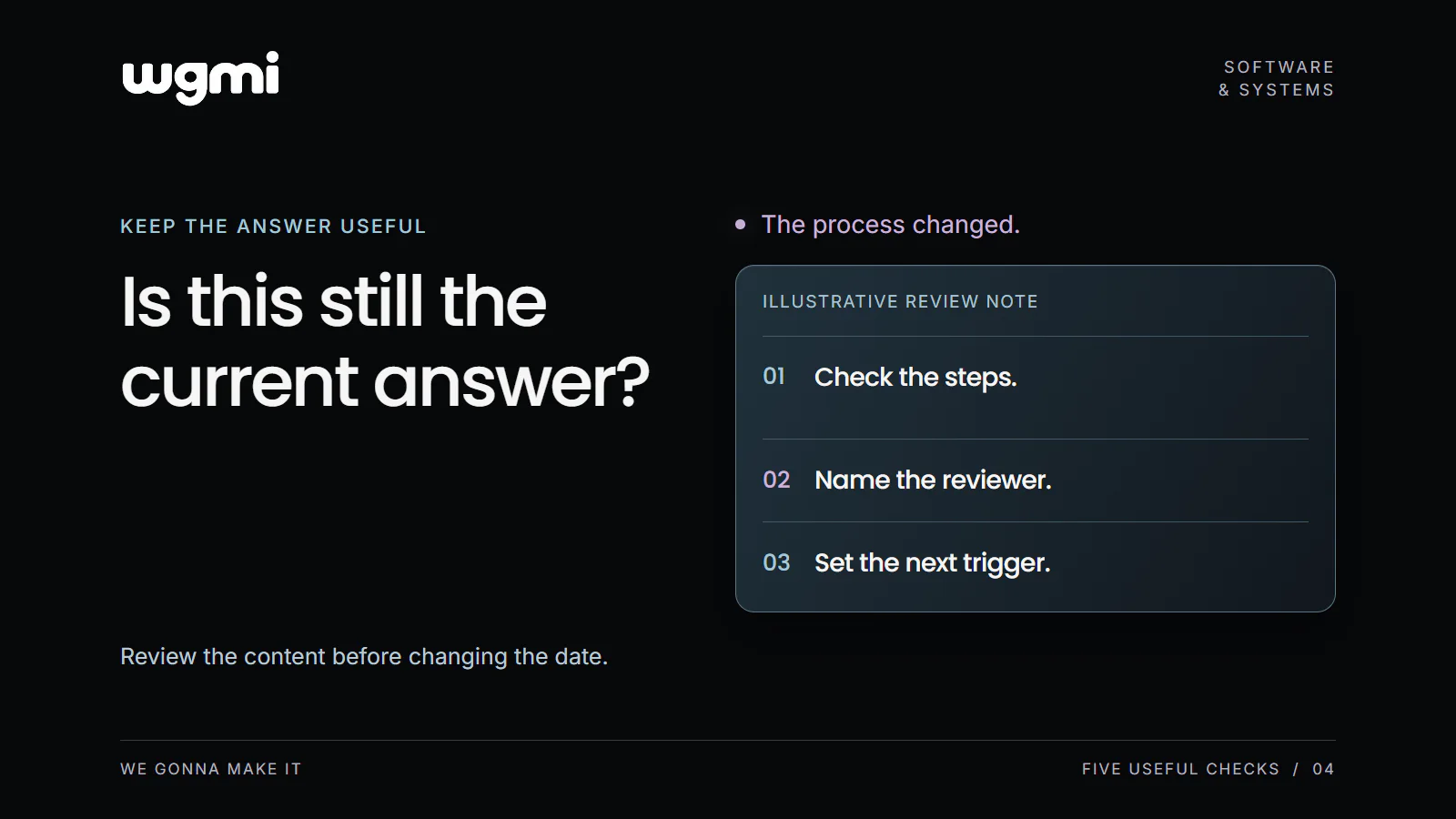
Our suggested check is to review one useful instruction against the service as it operates today, then record who checked it and what should trigger the next review. This connects content maintenance to the work people are trying to complete.
Start with a page someone relies on
Choose a page that supports a concrete action: collecting an order, sending an application, arranging a service visit or completing an internal request. Ask what someone would do differently because of the information on it.
In a fictional equipment hire business, the collection guide tells customers to visit reception. The business introduces a separate collection desk, but the FAQ still directs people to the old location. A confirmation message and a printable guide repeat that instruction.
The useful review starts with the customer task. Where should someone go now? What should they bring? Which opening hours apply? How can they get help if their situation falls outside the standard instructions?
Check the instruction against the actual work
Walk through the page with the person responsible for delivering the service. Check each step, location, requirement and contact route that the reader depends on. Open the linked pages and documents, and check whether they support the same process.
When possible, follow the route using a safe example. If testing would create a real order or request, arrange the appropriate test with the team first. Record anything you could not confirm so that it has a clear follow through.
Some answers may need another person to verify them. A content editor can correct the wording, while the person responsible for collections confirms the procedure. Name both contributions when the review depends on them.
Give the review date an honest meaning
A whole page review and a small edit have different scopes. Correcting a spelling error establishes that the wording was changed. It says nothing about whether the service details were checked.
The NHS service manual's review date pattern makes this distinction explicitly: its whole page review dates are for a review of the whole page, rather than a partial change. The pattern is written for its particular content context. The useful principle for this exercise is to record the work the date actually represents.
For your own instruction, an internal note might say that the collection steps and opening hours were confirmed with the operations lead. If a public review date would help readers, agree what it means before displaying it. Do not label a partial check as a review of everything on the page.
Connect changes to the content they affect
A scheduled review can provide a regular prompt. An event can require attention earlier: a changed location, a new contact route, a revised requirement or a discontinued service.
In the equipment hire example, changing the collection process should prompt a check of the FAQ, confirmation message and printable guide. Keep a short list of these related surfaces with the process. That gives the person making the operational change somewhere specific to look.
If an old guide must remain available for historical reference, make its status and the route to current instructions clear. Decide how to handle old links with the person responsible for the website. Avoid leaving two equally prominent pages that give conflicting directions.
Write a review note you can use again
A useful note can stay short.
Content: The page or document and the action it helps someone complete.
Checked: The steps, details and linked material that were verified, plus anything still unresolved.
Reviewer: The person who checked the content and the person who confirmed the underlying process, if different.
Next trigger: The event that requires another review, together with an agreed review date where useful.
For the fictional collection guide, the trigger could be a change to the collection location, hours or procedure. The note would also identify the confirmation message and printable guide as related material.
Begin with one frequently used instruction. A completed check gives you a concrete improvement and a repeatable way to keep that answer useful as the business changes.
Choose one instruction and record what was checked, who checked it and what should trigger its next review.
Prepared for WGMI with AI assistance.